Mechanically Driven Sealing
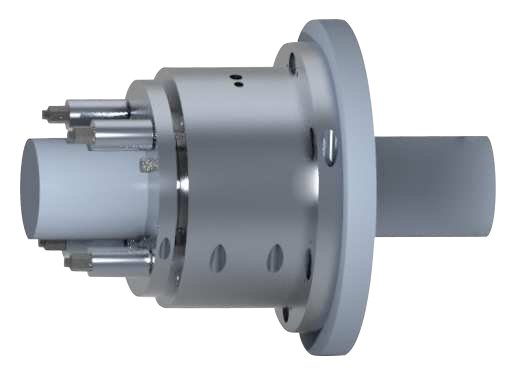
The MECO EP Type-3 model is a highly versatile split seal for horizontal dryers and reactors in vacuum service. Designed with two sealing faces, this model uses a mechanical drive to rotate bearing-grade, synthetic seal faces against fixed, stainless-steel stationary seal faces. With the ability to tolerate runout in both axial and radial directions, the EP Type-3 is an excellent choice for machinery experiencing thermal growth due to harsh operating conditions.
- Fully split
- Tolerates axial and radial shaft runout
- Self-adjusting
- Gas-purged
EP Type-3
Details
Description
Most often used on dryers and reactors in the chemical and plastics industries, the EP Type-3 seal has also been designed for sigma mixers, plow and paddle blenders, extruder-compounders and other similar rotating machinery. Addressing the challenges of higher temperatures, large-scale thermal motion, changing pressures, and shaft runout, this seal is well suited for applications where the process material goes through several phase changes and must contain liquids, vapors, and/or solids. The EP Type-3 is an ideal sealing choice for vacuum service, processes that may contain aggressive solvents, or the high shaft speeds and runout typically associated with large extruder compounders.
How it works
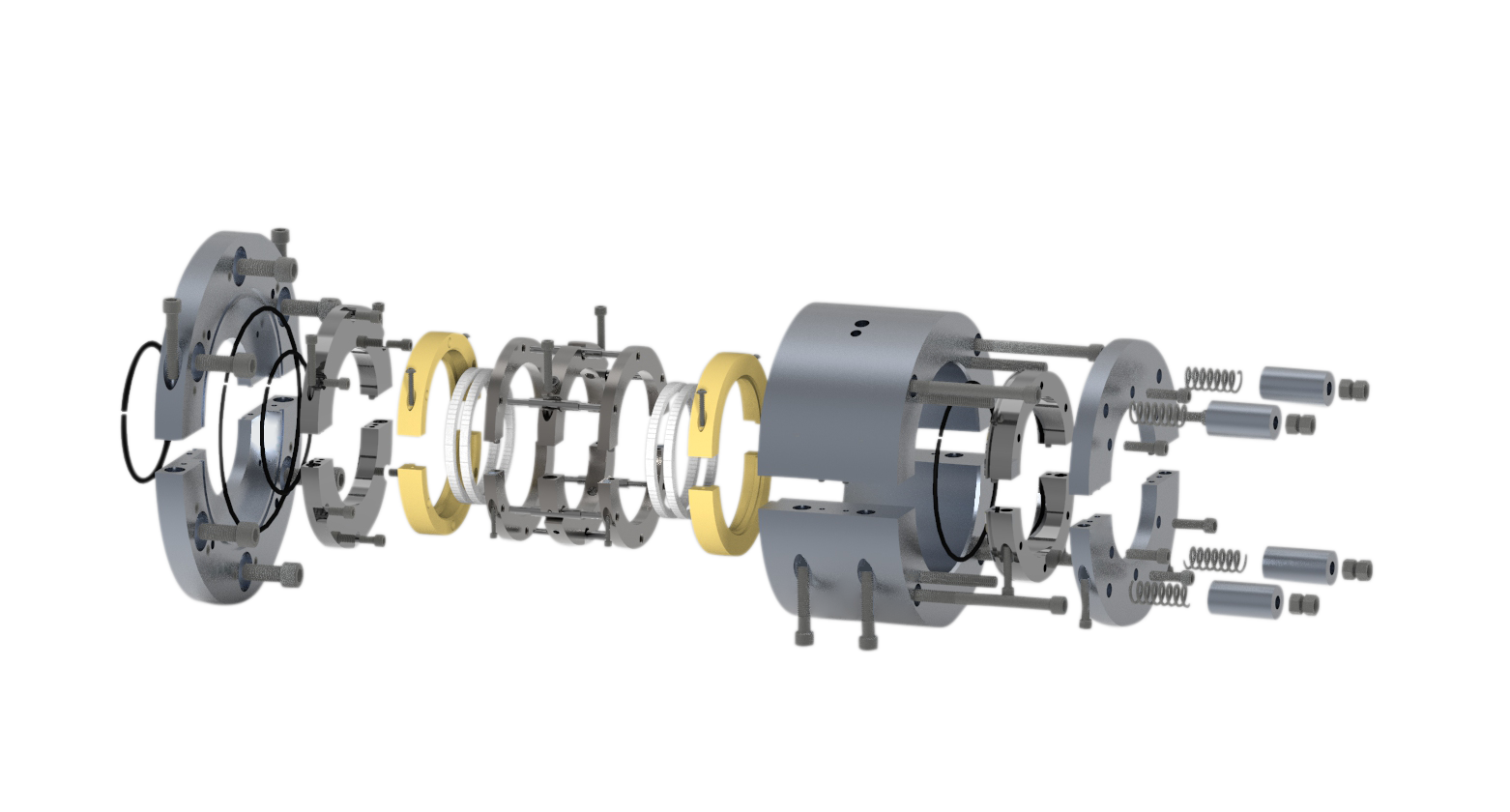
The EP Type-3’s ability to tolerate axial and radial runout derives its success from the mechanical drive design. The mechanical drive consists of rotating seal faces, braided packing or O-rings, pusher rings, drive pins, and a drive collar. By manufacturing the drive collar from a like material to the shaft, this allows the seal’s driving force to be maintained through thermal growth and shrinkage, since the collar and shaft will have a similar coefficient of thermal expansion. Large diameter, fixed length drive pins link a set of two pusher rings on either side of the drive collar, and transfer torque from the shaft’s rotation to the seal faces. Motion of the shaft is limited only by the length of the drive pins. Outside of the pusher rings are two sets of braided packing which form a static seal to the shaft. Where application parameters require it, O-rings may be used instead of packing rings.
Capturing the mechanical drive assembly is a stuffing box and gland follower style housing. A surface affixed to the bottom of the stuffing box and to the nose of the gland follower create the stationary seal faces. These seal faces are lapped and polished to a high standard of finish, ensuring the greatest sealing capability.
Maintenance
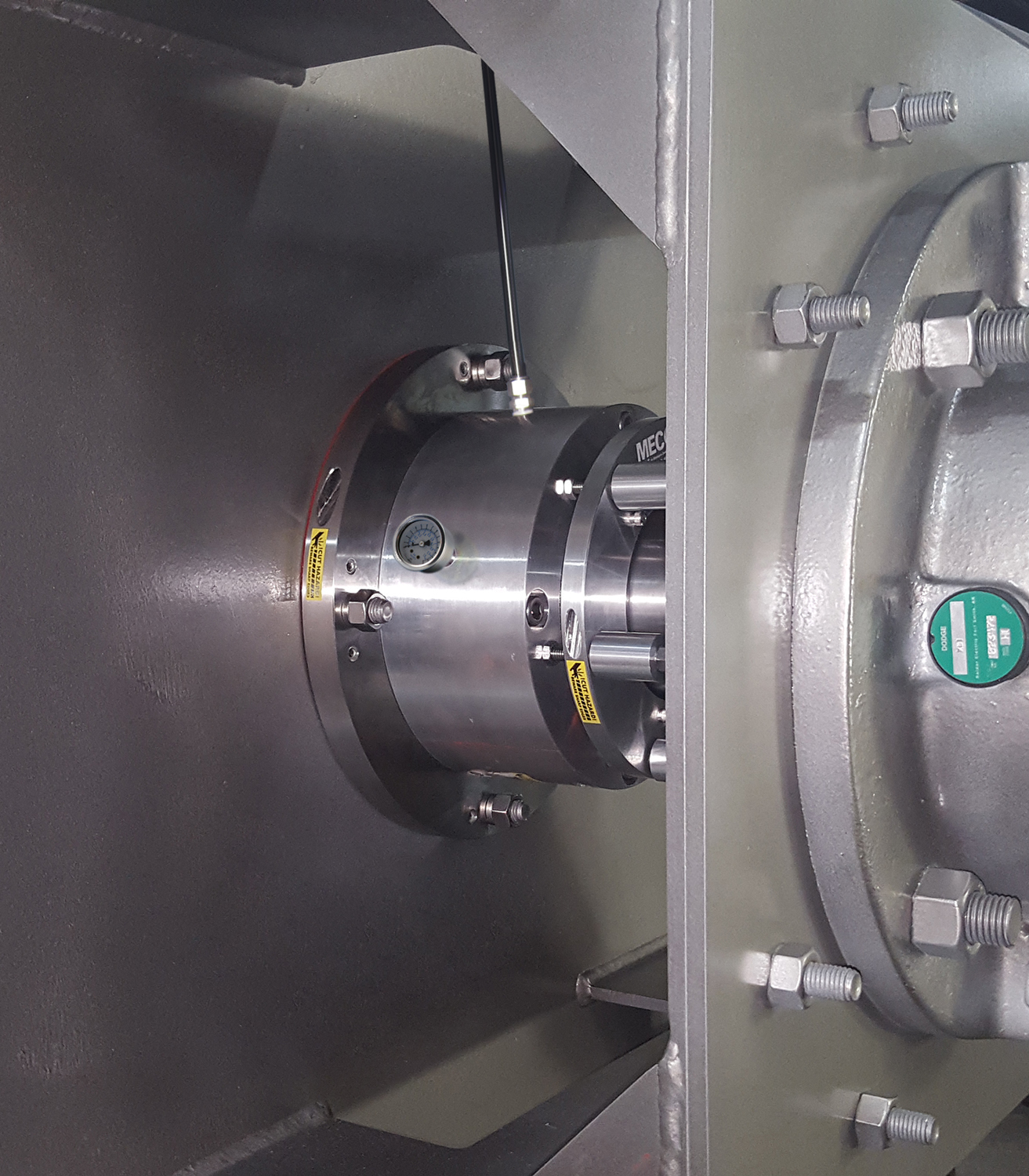
Included with each EP Type-3 seal are a gas regulator and pressure gauge to monitor and control the supply of purge gas to the seal cavity. This provides maintenance and production personnel with an effective diagnostic tool for seal performance and maintenance so that adjustments or repairs can be made before product leakage occurs.
As the sacrificial wear items in the seal degrade over time, seal face loading is maintained by the seal’s external load springs which compensate for wear by expanding. Once a significant drop in cavity pressure is observed or the opportunity presents itself, springs should be reset to encourage maximum life span of the seal. When seal cavity pressure can no longer be maintained by the springs or spring loading has been reset as much as possible, the rotating seal face assembly may be replaced with fully-split components in a rebuild kit, eliminating the need for removal of drives or bearings.
Construction
Designed for long service life and chemical compatibility with your process, the EP Type-3’s standard configuration uses stainless steel (300 series or 17-4) for the stationary seal faces and one of MECO’s bearing-grade polymers for the rotating seal faces. For large shaft diameters or abrasive process materials, replaceable stators may be incorporated into the design. Typical housings are constructed of 300 series stainless steel or aluminum, with other corrosion resistant alloys available upon request. The rotating drive assembly is manufactured from 300 series or 17-4 stainless steel.
The static sealing elements between the soft polymer rotors and the shaft are often FDA-approved braided PTFE packing rings, however depending on application requirements, elastomer O-rings may be used as well. Standard elastomer materials may be chosen from silicone, Viton®, EPDM, or nitrile.
Viton® is a registered trademark of The Chemours Company FC, LLC.
Sizing Chart
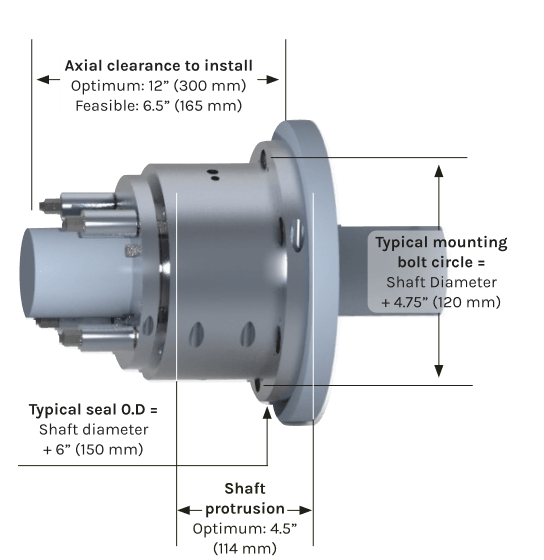
Dimensions will vary according to each application, but typical spatial dimensions with respect to the shaft diameter are illustrated in the chart below. Seals are not forced to fit your equipment, but designed specifically for your equipment.
Documentation
Need More Information or a Custom Quote?
Our team is ready to assist you with any questions or provide a personalized quote for your seal needs.
Get in touch